
Did you know that a one-second delay in your site’s load time can reduce conversions by up to 7%? In today’s digital landscape, where users expect instant results, website performance is no longer just a technical concern—it’s a critical factor for success. Whether you’re running a small business or managing an enterprise platform, the user experience hinges on how quickly your content reaches your visitors.
Modern tools and technologies, such as real-time machine learning and automated recommendations, are revolutionising the way we approach website performance. For instance, Alli AI has processed over 17 million code fixes instantly, showcasing the power of automation in enhancing core web vitals. These innovations not only improve load times but also boost your SEO rankings, ensuring your site stands out in search results.
This article will explore how combining advanced tools with traditional strategies can elevate your site’s performance. From improving user engagement to leveraging CDN and caching, we’ll guide you through practical steps to achieve faster, more efficient results. Stay tuned to discover how you can enhance your website’s delivery and keep your visitors engaged.
Key Takeaways
- Faster load times significantly improve user experience and SEO rankings.
- Real-time machine learning tools automate performance enhancements.
- Core web vitals are essential for maintaining a competitive edge.
- Automated recommendations can streamline your optimisation process.
- Combining advanced tools with traditional strategies yields the best results.
Introduction to AI-Driven Page Speed Advancements
In today’s fast-paced digital world, a slow-loading site can cost you valuable visitors. Users expect instant access to information, and even a slight delay can lead to frustration. This makes load time a critical factor in shaping the user experience and influencing your site’s success.
Understanding the Need for Faster Load Times
Slow load times can drive visitors away, increasing bounce rates and reducing engagement. Studies show that a delay of just a few seconds can significantly impact how users perceive your brand. For example, a site that takes more than three seconds to load loses nearly 40% of its potential visitors.
Modern optimisation tools are designed to address these challenges. By improving website performance, they ensure that your content reaches users quickly and efficiently. This not only enhances the user experience but also boosts your SEO rankings, making your site more visible in search results.
The Role of Optimisation in User Experience and SEO
Technical metrics like Core Web Vitals play a crucial role in measuring website performance. These metrics include load time, interactivity, and visual stability, all of which contribute to a seamless user experience. Tools like modern optimisation tools use these metrics to provide actionable insights and automated recommendations.
Here’s how these tools can benefit your site:
- Reduce load times by optimising images and files.
- Improve server response times through caching and CDN integration.
- Enhance interactivity and visual stability for a smoother experience.
| Metric | Impact |
|---|---|
| Load Time | Directly affects bounce rates and user engagement. |
| Interactivity | Determines how quickly users can interact with your site. |
| Visual Stability | Ensures elements on the page don’t shift unexpectedly. |
By leveraging these tools, businesses can stay competitive in search results and deliver a superior experience to their visitors. The integration of advanced processes ensures that your site remains efficient, engaging, and ready to meet modern user expectations.
How AI Page Speed Optimisation Works

What if your site could fix its own performance issues without manual intervention? Modern tools use machine learning to analyse your website in real-time, identifying bottlenecks and generating customised recommendations. This automation transforms hours of manual work into nearly instant results.
Leverage Machine Learning for Real-Time Optimisation
Machine learning algorithms continuously monitor your site’s performance, analysing data from tools like Lighthouse and PageSpeed Insights. They detect issues such as slow load times, unoptimised images, and inefficient server responses. For example, Alli AI has processed over 17 million code fixes instantly, showcasing the power of automation.
These algorithms don’t just identify problems—they solve them. By integrating with your website, they apply fixes in real-time, ensuring your site remains fast and efficient. This approach not only improves user experience but also boosts your SEO rankings.
Automated Analysis and Customised Recommendations
The process begins with data collection. Machine learning tools gather metrics like Core Web Vitals, which measure load time, interactivity, and visual stability. These metrics provide a clear picture of your site’s performance and highlight areas for improvement.
Next, the tools generate actionable insights. For instance, they might recommend compressing images, enabling caching, or integrating a CDN. These recommendations are tailored to your site’s specific needs, ensuring maximum impact.
“With Alli AI, we’ve seen a 40% improvement in our site’s load time, resulting in higher engagement and conversions.”
Here’s how the workflow typically looks:
- Data collection from tools like Lighthouse and PageSpeed Insights.
- Real-time analysis of Core Web Vitals and other metrics.
- Automated identification of bottlenecks and inefficiencies.
- Customised recommendations for immediate implementation.
| Metric | Impact |
|---|---|
| Load Time | Directly affects user engagement and bounce rates. |
| Interactivity | Determines how quickly users can interact with your site. |
| Visual Stability | Ensures elements on the page don’t shift unexpectedly. |
By leveraging these tools, you can ensure your website delivers a seamless user experience while staying competitive in search results. For more insights, explore how AI-powered webpage optimisation can transform your site’s performance.
Top AI-Powered Page Speed Optimisation Tools

Your website’s performance can make or break your online presence. To stay competitive, you need tools that deliver fast, reliable results. Here’s a curated list of the most effective solutions available today.
Key Features and Unique Selling Points
Alli AI stands out with its automated code fixes and real-time monitoring. It processes millions of optimisations instantly, ensuring your site remains efficient. Check Your WordPress Score offers detailed insights into your site’s metrics, helping you identify and resolve issues quickly. Screpy excels with its comprehensive dashboard, providing actionable recommendations for improving Core Web Vitals.
These tools share common strengths:
- Automated image optimisation to reduce load time.
- Extensive caching networks for faster content delivery.
- Seamless integration with popular CMS platforms like WordPress.
User Testimonials and Proven Success Stories
Real users have seen significant improvements with these tools. One Alli AI user reported, “Our site’s load time improved by 40%, leading to higher engagement and conversions.” Another Screpy user shared, “The detailed metrics helped us boost our SEO rankings within weeks.”
“With Check Your WordPress Score, we identified and fixed critical issues that were slowing down our site. The results were immediate.”
These testimonials highlight the tangible benefits of using advanced tools. Whether you’re a small business or an enterprise, these solutions can transform your site’s performance.
Compatibility with enterprise CDNs and ease of use make these tools a valuable addition to your SEO workflow. By leveraging their features, you can ensure your site delivers a seamless user experience while staying competitive in search results.
Enhancing Core Web Vitals and Overall Website Performance

Your site’s success hinges on how well it performs for visitors. Metrics like load time, interactivity, and visual stability shape their experience and influence whether they stay or leave. Understanding these Core Web Vitals is the first step to boosting engagement and conversions.
Understanding Metrics Such as Load Time and Accessibility
Google’s Core Web Vitals measure three critical aspects of your website: loading speed (LCP), interactivity (INP), and visual stability (CLS). For instance, a good LCP score is under 2.5 seconds, while CLS should stay below 0.1 to prevent frustrating layout shifts.
Here’s why these metrics matter:
- Largest Contentful Paint (LCP): Determines how quickly your main content loads. Slow LCP drives 50% of users away if it exceeds 3 seconds.
- Interaction to Next Paint (INP): Measures responsiveness. Aim for under 200 milliseconds to keep users engaged.
- Cumulative Layout Shift (CLS): Ensures visual consistency. A score above 0.1 may increase bounce rates.
Impact on Bounce Rates, Engagement, and Lead Generation
Poor performance directly affects your bottom line. Walmart saw a 2% rise in conversions after shaving just one second off their load time. Similarly, the BBC lost 10% of visitors for every additional second their site took to load.
Optimising these metrics delivers tangible results:
- Lower bounce rates: Faster sites retain 40% more visitors.
- Higher engagement: Pinterest’s traffic grew by 15% after reducing load time by 40%.
- Improved conversions: Smooth interactions and quick access to content encourage users to take action.
“Sites scoring well on Core Web Vitals see 20% longer session durations and 15% more page views.”
Tools like Lighthouse provide actionable insights to refine these metrics. Regular monitoring ensures your website stays ahead of algorithm updates and user expectations.
Integrating AI with Traditional SEO Strategies

Combining advanced tools with traditional methods can transform your SEO strategy. Modern technologies offer insights that complement human expertise, creating a powerful synergy. By integrating these tools, you can streamline workflows and achieve better results.
Collaborative Workflows and Seamless Team Integration
AI-driven insights provide real-time data and recommendations, enhancing traditional SEO practices. For example, tools like Screpy offer team management features, allowing multiple users to collaborate efficiently. This ensures that everyone is aligned and working towards the same goals.
Here’s how this integration benefits your workflow:
- Unified Dashboards: Access real-time data and actionable insights in one place.
- Task Assignment: Assign tasks based on automated recommendations, speeding up the process.
- Customisable Reports: Generate tailored reports that highlight key metrics and areas for improvement.
“With Screpy, our team saw a 30% improvement in task efficiency, thanks to its collaborative features.”
By combining automated analysis with human oversight, you ensure consistency and quality. This approach not only saves time but also enhances the overall performance of your website.
| Feature | Benefit |
|---|---|
| Real-Time Data | Provides immediate insights for quick decision-making. |
| Team Collaboration | Enhances communication and task management. |
| Custom Reports | Offers tailored insights for specific search strategies. |
For more insights on integrating these tools, explore how AI can enhance your SEO. By blending technology with expertise, you can achieve faster and more efficient results.
Practical Implementation and Continuous Optimisation
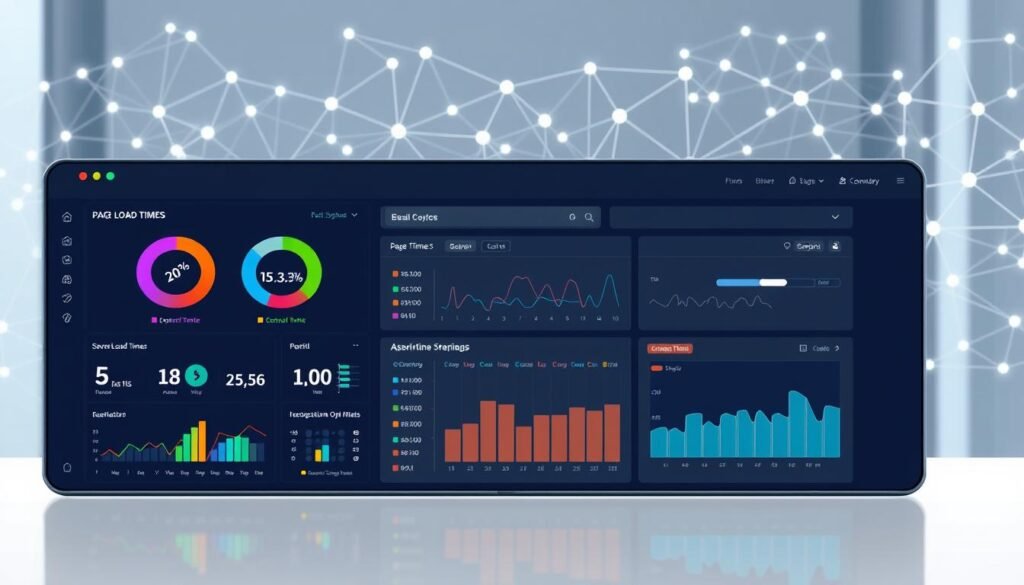
Achieving faster website performance requires a blend of advanced tools and consistent monitoring. By following a structured approach, you can ensure your site remains efficient and delivers a seamless user experience. Below, we’ll guide you through the steps to implement these tools and maintain continuous improvements.
Step-by-Step Guide to Implementing AI Tools on Your Site
Start by selecting the right tool for your website. Look for features like automated analysis, real-time monitoring, and customised recommendations. Once chosen, integrate the tool into your site by following the provider’s setup instructions.
Next, configure the tool to analyse key metrics such as Core Web Vitals. This includes load time, interactivity, and visual stability. Ensure the tool is set to monitor your website continuously, providing actionable insights for improvement.
Finally, implement the recommendations provided by the tool. This might involve optimising images, enabling caching, or improving server response times. Regularly review the results and adjust your strategy as needed.
Monitoring, Data Analysis, and Iterative Improvements
Continuous monitoring is essential for maintaining optimal website performance. Use the tool’s dashboard to track key metrics and identify any emerging issues. This proactive approach helps you address problems before they impact your user experience.
Analyse the data to understand trends and areas for improvement. For example, if your content takes too long to load, consider compressing files or using a CDN. Historical data can also inform future decisions, ensuring your site remains efficient over time.
Iterative improvements are key to long-term success. Regularly test changes and measure their impact on performance. Tools like automate on-page SEO can streamline this process, saving you time and effort.
By following these steps, you can ensure your website delivers a fast, reliable experience for your visitors. Continuous optimisation is not a one-time task but an ongoing process that keeps your site competitive and efficient.
Conclusion
In today’s digital age, a seamless website experience is no longer optional—it’s essential. By leveraging advanced tools, you can significantly enhance your site’s performance and deliver a better experience for your users. From real-time monitoring to actionable insights, these solutions streamline the process of improving key metrics.
Continuous monitoring and iterative improvements ensure your site remains efficient and competitive. Tools like Alli AI and Screpy have already helped businesses achieve measurable results, such as faster load times and higher engagement rates.
Take the next step towards optimising your website. Explore the featured tools and integrate them into your strategy to achieve faster, more reliable results. Start today and future-proof your site’s performance.
FAQ
Why is faster load time important for my website?
Faster load times improve user experience, reduce bounce rates, and boost engagement. They also positively impact your search engine rankings, helping your site attract more visitors.
How does AI help in improving page speed?
AI uses machine learning to analyse your site in real-time, identifying bottlenecks and providing customised recommendations for faster performance without manual intervention.
What are Core Web Vitals, and why do they matter?
Core Web Vitals are metrics like load time, interactivity, and visual stability. They measure user experience and are crucial for SEO, as they influence your site’s ranking on search engines.
Can AI tools integrate with my existing SEO strategies?
Yes, AI tools seamlessly integrate with traditional SEO workflows, enhancing your team’s efforts by automating analysis and providing actionable insights for continuous improvement.
What are some top AI-powered tools for page speed optimisation?
Tools like Google Lighthouse, Cloudflare, and WP Rocket offer unique features such as automated caching, image compression, and real-time performance monitoring to enhance your site’s speed.
How do I implement AI tools on my website?
Start by selecting a tool that fits your needs, follow the step-by-step setup guide, and monitor performance metrics regularly to make iterative improvements.
How does page speed affect lead generation?
Faster websites keep visitors engaged, increasing the likelihood of conversions. Slow load times, on the other hand, can drive potential customers away, reducing lead generation opportunities.
What role does caching play in improving website performance?
Caching stores frequently accessed data, reducing server load and speeding up content delivery. This ensures a smoother experience for your visitors and improves overall site performance.
Source Links
- Let’s Talk About Lazy Loading and SEO
- CSS performance optimization – Learn web development | MDN
- AI Agents Explained: Functions, Benefits, and Applications
- Industry 5.0: The AI Revolution You Can’t Afford To Ignore
- SEO in the Age of AI: What Marketers Need to Know
- 12 Ways to Use Generative AI for SEO
- AI-Powered SEO: How to Enhance Your Content Strategy
- Generative AI Solutions Powered by NVIDIA
- How does AI impact SEO, and how are agencies adapting?
- Core Web Vitals Optimization Guide for SEO Success in 2025
- The Role of Core Web Vitals in SEO, Speed, User Experience, and Rankings
- How to Use AI for SEO: A 10-Step Practical Guide
- Answer engine optimization: 6 AI models you should optimize for
- Navigating the AI SEO Revolution: How Answer Engines Are Changing the Game
- AI-driven value stream management: Optimizing continuous flow efficiency
- Why Website Loading Speed Matters
- 20 AI SEO Statistics to Boost Your Search Rankings
- LLM and Seo: The Impact of Artificial Intelligence on Search Engine Optimization – Agence marketing digital à Genève Suisse – Eminence