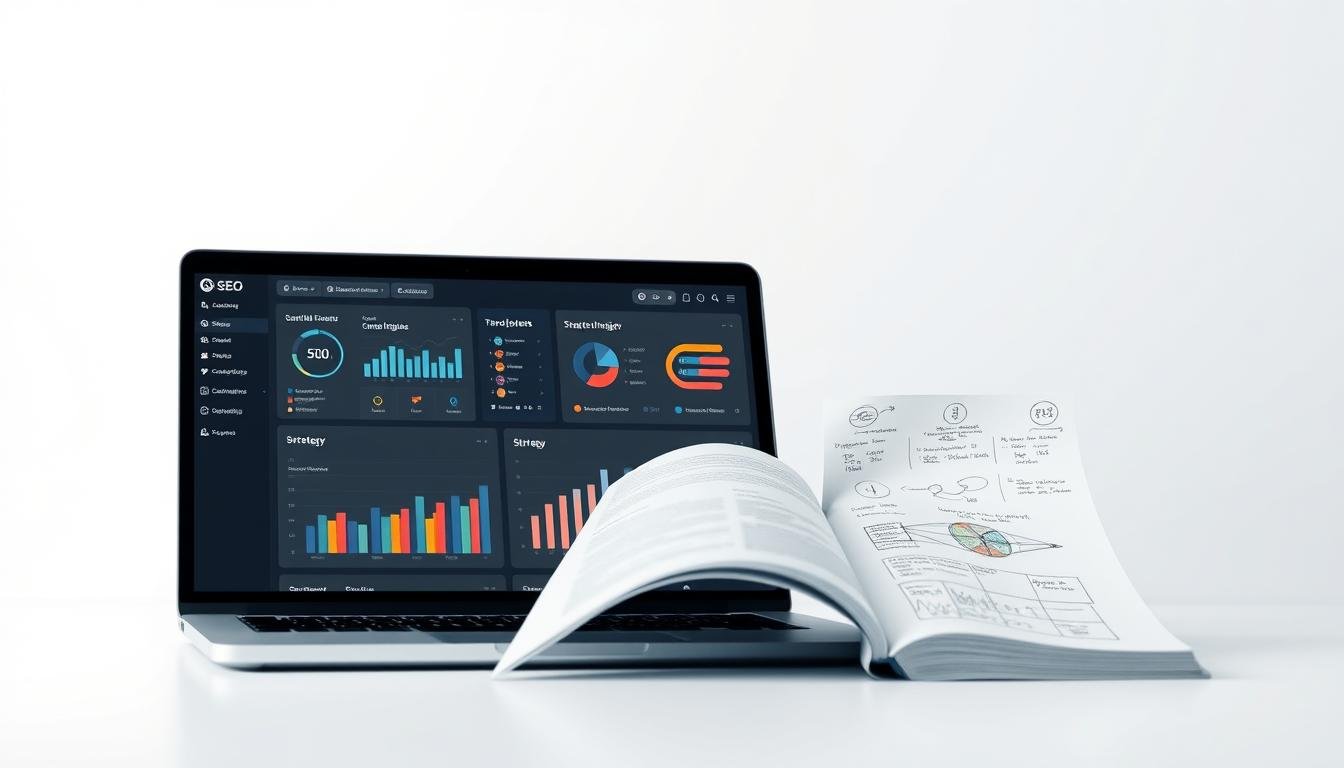
Did you know that 75% of businesses are now using advanced tools to streamline their online strategies? As search engines evolve, so do the methods to optimise your presence. Traditional approaches rely on detailed research and creative content, while modern solutions offer speed and precision through automation.
Understanding the strengths of each method is crucial. Human-driven strategies excel in crafting personalised content and addressing unique challenges. On the other hand, automated tools provide real-time insights and handle repetitive tasks efficiently. Both have their place in a comprehensive strategy.
Combining these approaches can yield impressive results. For instance, businesses have seen a 30% boost in search revenue by integrating both techniques. This article explores how to balance creativity with efficiency to enhance your online performance.
Key Takeaways
- 75% of businesses use advanced tools to improve their online strategies.
- Traditional methods focus on detailed research and personalised content.
- Automated tools offer speed and real-time insights for optimisation.
- Combining both approaches can boost search revenue by up to 30%.
- Understanding the strengths of each method is essential for success.
Introduction to Technical SEO Approaches
Effective website optimisation begins with a solid grasp of technical strategies. These methods ensure your site meets search engine requirements while delivering a seamless experience for users. By focusing on the right techniques, you can drive organic traffic and improve your online presence.
Understanding Search Engine Optimisation
Search engine optimisation (SEO) involves enhancing your website to rank higher in search results. Key components include keyword research, on-page adjustments, and technical improvements. These elements work together to make your site more visible and accessible to users.
For example, optimising title tags and meta descriptions can boost click-through rates. Similarly, improving site speed and mobile responsiveness enhances user satisfaction. These steps are essential for a successful strategy.
Assessing Your Current SEO Strategy
Regular audits are crucial for evaluating your website’s performance. Tools like Screaming Frog can identify issues such as broken links or duplicate content. Addressing these problems ensures your site meets technical standards.
Performance analysis provides valuable insights into what’s working and what needs improvement. For instance, tracking keyword rankings helps you understand your site’s visibility. Adapting to changes in search engine algorithms keeps your strategy effective over time.
| Component | Importance |
|---|---|
| Keyword Research | Identifies high-traffic terms |
| On-Page Optimisation | Improves content relevance |
| Technical Audits | Ensures site functionality |
Combining these approaches creates a robust strategy. For more insights, explore the key differences between traditional and modern optimisation. This balance ensures your website remains competitive and user-friendly.
What is Manual Technical SEO?

When it comes to optimising your website, human expertise remains unparalleled. Manual technical SEO relies on detailed analysis and bespoke strategies tailored to your unique needs. This approach ensures every task is handled with precision, from keyword selection to on-page adjustments.
Key Elements and Personalisation
Manual methods allow for complete control over each technical element. Skilled professionals ensure your content resonates with your target audience. For instance, manual keyword selection focuses on relevance and intent, while backlink outreach builds meaningful connections.
Personalisation is a cornerstone of this approach. By understanding your audience’s needs, experts craft content that drives engagement. This level of detail often leads to superior results, even if it requires more time and effort.
Control and Creative Freedom
One of the biggest advantages of manual optimisation is creative freedom. Professionals can adapt to changes in search engine algorithms, ensuring your strategy remains effective. Experience plays a key role here, as seasoned experts know how to navigate complex updates.
For example, adjusting meta descriptions or improving site speed can significantly impact user experience. These tasks are meticulously handled to maintain quality and consistency. The result is a website that not only ranks well but also delivers value to visitors.
In summary, manual technical SEO combines human insight with creative control. This approach ensures your website stands out in a competitive digital landscape.
The Emergence of AI in Technical SEO

The digital landscape is rapidly evolving, and so are the tools we use to navigate it. One of the most significant advancements is the integration of artificial intelligence into technical strategies. This shift has brought unparalleled efficiency and precision to the optimisation process.
Automation and Real-Time Insights
Artificial intelligence excels at automating repetitive tasks, freeing up valuable time for more strategic work. For instance, it can analyse vast amounts of data in seconds, identifying patterns that would take humans hours to uncover. This speed allows for real-time adjustments, ensuring your website stays optimised as search engine algorithms evolve.
Tools powered by AI provide actionable insights, helping you address issues proactively. Whether it’s improving page speed or enhancing mobile responsiveness, these recommendations are tailored to boost your ranking and user experience.
Enhanced Data Analysis
AI’s ability to process large datasets is a game-changer. It can predict which content updates will yield the best results, helping you prioritise your efforts. For example, it can analyse engagement metrics like bounce rates and click-through rates to pinpoint areas for improvement.
Case studies show that businesses using AI-driven tools have seen significant improvements in their ranking. By leveraging these insights, you can refine your strategy to meet both user and search engine expectations.
For a deeper dive into how AI is transforming technical audits, explore the emergence of AI in technical SEO. This resource highlights how automation simplifies complex analyses and enhances overall performance.
AI vs Manual Technical SEO: Key Comparisons

Choosing the right approach to optimise your website can significantly influence its performance. Both manual and AI-driven methods have unique strengths and limitations. Understanding these can help you make informed decisions for your strategy.
Pros and Cons Breakdown
Manual methods excel in personalised outreach and customised content creation. Building quality backlinks often requires human effort to establish meaningful connections. However, this approach can be time-intensive and demands a significant amount of effort.
On the other hand, automation tools streamline repetitive tasks and provide real-time insights. They can process large amounts of data quickly, making it easier to scale your strategy. Yet, over-reliance on technology may lead to less human oversight, potentially affecting the quality of your content.
Impact on Ranking and User Engagement
The method you choose directly affects your site’s ranking and user engagement. Manual strategies often result in higher-quality content that resonates with your audience. This can improve engagement metrics like time spent on the page and click-through rates.
Automated tools, however, offer faster adjustments to keep up with algorithm changes. They can predict trends and optimise content in real-time, which can boost your ranking. Yet, without human creativity, the content may lack the emotional voice needed to connect with users.
“The balance between human creativity and machine efficiency is crucial for long-term success.”
In summary, both approaches have their place in a comprehensive strategy. Combining the strengths of each can help you achieve better results while minimising their limitations.
Strategic Advantages and Limitations

Speed and precision are now achievable through advanced digital tools. Automation streamlines tasks like audits and data analysis, freeing your team to focus on strategy. For large sites, this scalability is transformative—eBay, for instance, uses automated scans to manage billions of URLs efficiently.
Efficiency Through Automation
AI-led audits reduce hours of manual checks to minutes. Tools like Screaming Frog crawl entire sites, prioritising issues like broken links or duplicate content. Real-time alerts, as used by Walmart, ensure rapid fixes, keeping your site competitive.
Enhanced analysis of keyword performance refines your strategy. Platforms like BrightEdge suggest semantically related terms, boosting relevancy. Predictive reporting also spots trends, such as declining visibility, allowing proactive adjustments.
However, automation has limits. While it excels at scaling tasks, human oversight ensures brand voice consistency. Manual reviews catch nuances algorithms might miss, like emotional tone in meta descriptions. The trade-off? Efficiency gains versus personalised touches.
“Automation handles the grind; humans handle the craft.”
In summary, leveraging seo tools accelerates optimisation but isn’t a full replacement. Balance automated audits with expert reviews to maintain quality while maximising speed.
Integrating Human Expertise with AI-Driven Tools

Combining human creativity with advanced tools can transform your optimisation efforts. This approach ensures you leverage the best of both worlds—personalised strategies and scalable efficiency. By blending these methods, you can achieve superior results while maintaining quality and relevance.
Balancing Human Touch and Machine Efficiency
Human expertise brings a unique understanding of your audience’s needs. This insight allows for tailored content that resonates deeply. On the other hand, advanced tools handle repetitive tasks with speed and precision, freeing your team to focus on strategy.
For example, tools can analyse a vast amount of data in seconds, identifying trends and issues. However, human judgment is essential to verify these insights and ensure they align with your brand’s voice. This balance ensures your strategy remains both efficient and authentic.
Implementation Best Practices
Start by using advanced tools for keyword research and performance monitoring. These tools provide real-time insights, helping you make informed decisions quickly. However, always apply human oversight to refine the data and ensure it meets your goals.
Next, focus on continuous research and adjustments. Regularly review your strategy to identify areas for improvement. This iterative process ensures your approach evolves with changing algorithms and user expectations.
Finally, integrate measurable steps for real-time improvements. For instance, use tools to monitor page-level metrics and make adjustments as needed. This proactive approach keeps your site competitive and user-friendly.
“The synergy between human creativity and advanced tools is the key to long-term success.”
For more insights on this integration, explore the impact of advanced tools on optimisation. This resource highlights how blending these methods can enhance your online presence.
Conclusion
In the ever-evolving digital landscape, staying ahead requires a blend of innovation and expertise. By integrating advanced tools with human insight, you can achieve superior performance and foster meaningful user engagement. Embracing emerging technology enhances efficiency, while the human touch ensures your strategy remains authentic and impactful.
Balancing automation with personalised approaches allows you to scale your efforts without compromising quality. This synergy not only improves content optimisation but also boosts your site’s ranking. For instance, combining real-time insights with creative strategies ensures your content resonates with your audience.
To stay competitive, continuously adapt your methods and leverage the strengths of both approaches. Assess your current strategy and explore a balanced path for future success. For more insights, consider exploring how to integrate these methods effectively.
Ultimately, the ability to blend technology with human expertise will define your success in the digital market. Start refining your approach today to unlock your site’s full potential.
FAQ
What is the difference between manual and AI-driven technical SEO?
Manual technical SEO involves hands-on tasks like keyword research, content optimisation, and backlink building. AI-driven SEO uses tools and algorithms to automate these processes, providing real-time insights and faster results.
How does AI improve search engine optimisation strategies?
AI enhances SEO by analysing vast amounts of data quickly, identifying trends, and offering actionable insights. It also automates repetitive tasks, saving time and improving efficiency.
Can AI completely replace manual SEO efforts?
While AI can handle many tasks, human expertise is still crucial for creativity, strategy, and understanding nuanced user experiences. A balanced approach often yields the best results.
What are the key benefits of using AI in technical SEO?
AI offers benefits like faster data analysis, real-time adjustments, and improved accuracy. It also helps in staying ahead of algorithm changes and optimising content for better engagement.
How does manual SEO provide more control over your strategy?
Manual SEO allows for personalised adjustments, creative freedom, and a deeper understanding of your audience. You can tailor your approach to specific needs and goals.
What tools are commonly used in AI-driven technical SEO?
Popular tools include SEMrush, Ahrefs, and Google’s AI-powered algorithms. These tools help with keyword research, site audits, and performance tracking.
How does AI impact website ranking and user experience?
AI can improve rankings by optimising content and identifying high-performing keywords. It also enhances user experience by analysing behaviour and suggesting improvements.
What are the limitations of relying solely on AI for SEO?
AI may lack the ability to understand context or creativity fully. It also requires regular updates to stay effective, and over-reliance can lead to missed opportunities for personalisation.
How can you integrate AI with manual SEO practices?
Use AI for data-heavy tasks like analysis and automation, while relying on human expertise for strategy, content creation, and creative decisions. This hybrid approach maximises efficiency and effectiveness.
What should you consider when choosing between AI and manual SEO?
Consider factors like your budget, the complexity of your website, and your team’s expertise. A combination of both methods often provides the best balance of efficiency and control.
Source Links
- The Impact of AI on SEO for Small Businesses
- AI-Powered SEO: How to Enhance Your Content Strategy
- AIOSEO vs. SEOPress: Our Deep Dive Reveals the SEO Plugin Winner!
- Is SEO Dead? How to Update your Seo Strategy to 2025
- Crafting SEO Strategy in 2025: A Quick-Start Guide | Copy.ai
- AEO vs SEO – Understanding the Differences & Why it Matters
- AI-Driven SEO Strategies for 2025 | SEO Agency India | StickyPins
- AI in Marketing: What Marketers Really Think | Brafton
- How to Use AI for SEO: A 10-Step Practical Guide
- SEO in the Age of AI: What Marketers Need to Know
- AI SEO Tools vs Traditional SEO Software: Key Differences
- Common Mistakes to Avoid When Implementing AI in Your SEO Strategy | Market Vantage
- The Role Of AI And Automation In Enterprise SEO Growth | ResultFirst
- SEO Intelligence vs Traditional SEO: Which One Is The Best For You?
- AI adoption accelerating, but many fall behind: IAB report | MarTech
- The Role of AI in SEO: 25 Potential Benefits and Concerns – Backlink Building
- Exploring Their Roles in Digital Marketing Strategies
- The dos and don’ts of using AI for SEO | Definition